
Perspectives on why to do PhD
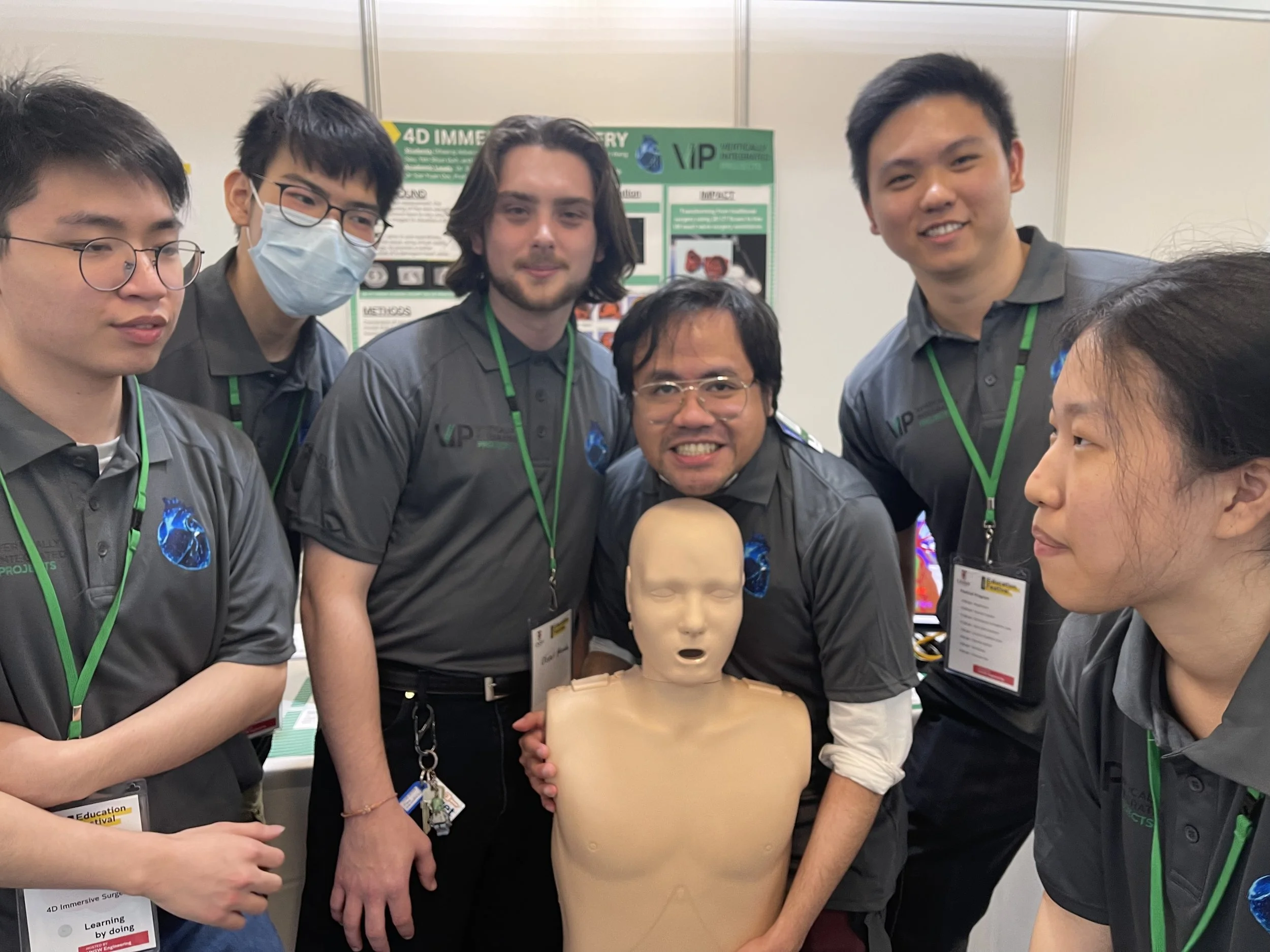
Team shenanigans at a conference
Deciding to take on a PhD can be a life-changing decision, and there are many questions to consider, from stipend support to research topics. Here, UNSW graduate Chi explains his concerns, questions, and considerations in deciding to apply for a PhD program with SVMG.
Pursuing further education
When considering a PhD, think about your long-term career goals and your current short-term situation. Committing to a doctorate can be a 3-3.5-year decision; financially, a PhD allowance may typically be less than a full-time role. However, you may want to think about how a PhD can improve your career trajectory and what roles you would get after a PhD compared to having three years of job experience.
Reflect on: How does a PhD fit into my career path?
I'm currently working on my start-up, which aims to utilise cutting-edge technologies like neural networks and artificial intelligence to support small businesses. Having a PhD title will significantly boost my experience in the field and support my credentials for potential clients.
Finding a Research Topic
Finding your research topic can be difficult. Consider your interests and future motivations, reflect on what recent news or technology excites you, and think about which courses you enjoyed during your undergraduate program. Talk with your potential supervisor about the state of the art in the field, do the legwork of reading relevant literature, and brainstorm potential projects. Keep an open mind and consider many ideas in the early phase.
Consolidating your research topic and project will then involve writing a research proposal outlining the problem, your objective, and your proposed solution. Read Chi’s response to frequently asked questions for further insights into proposal writing.
Ask yourself: What topic will I be investigating and what impact will it have?
In my PhD, I will investigate automated labelling of coronary arteries using various types of neural networks. Automating coronary artery labelling could drastically shorten doctors' diagnostic workflow and enable earlier detection of cardiovascular disease.
You and Your Supervisor
Many PhD students say a strong relationship with their supervisor and consistent communication throughout the project are key to success. In the beginning, researching potential supervisors and their research field well can help guide your project ideas. It’s also essential to understand your potential supervisor’s expectations and consider what insights they can provide.
Consider: What questions or concerns can I bring up with my supervisor?
About my topic: Initially, I asked if I could pursue PhD topics that are related to artificial intelligence and biomedical fields, and to see what relevant projects would be available.
Expectations of my role: I also asked what a PhD candidate does. This would encompass: performing a literature review, conducting experiments, and eventually collecting results. In my case, my focus on AI meant I would also be coding a lot. In the end, I'll also be publishing a PhD thesis, so it's structured like an honours research program, but with significantly greater depth.
Stipends: I also asked my supervisor if she was willing to offer a stipend or allowance. It's important to ensure you are on the same page as your supervisor regarding your financial situation and can agree on a suitable plan.
Project Structure: I also asked about the typical duration of a PhD project - the standard is 3 to 3.5 years. I also asked if there would be opportunities to travel abroad for conferences and similar programs.
My Perspective in a nutshell
If you've undertaken an honours thesis program, you'll know research can be challenging. In the end, it's important to choose a topic that interests you, but even more important is choosing a supervisor who supports you. If you are motivated, driven and passionate about research and like exploring (or even inventing) new stuff – a PhD is for you and a very smart career choice! Plus, it can be a lot of fun.